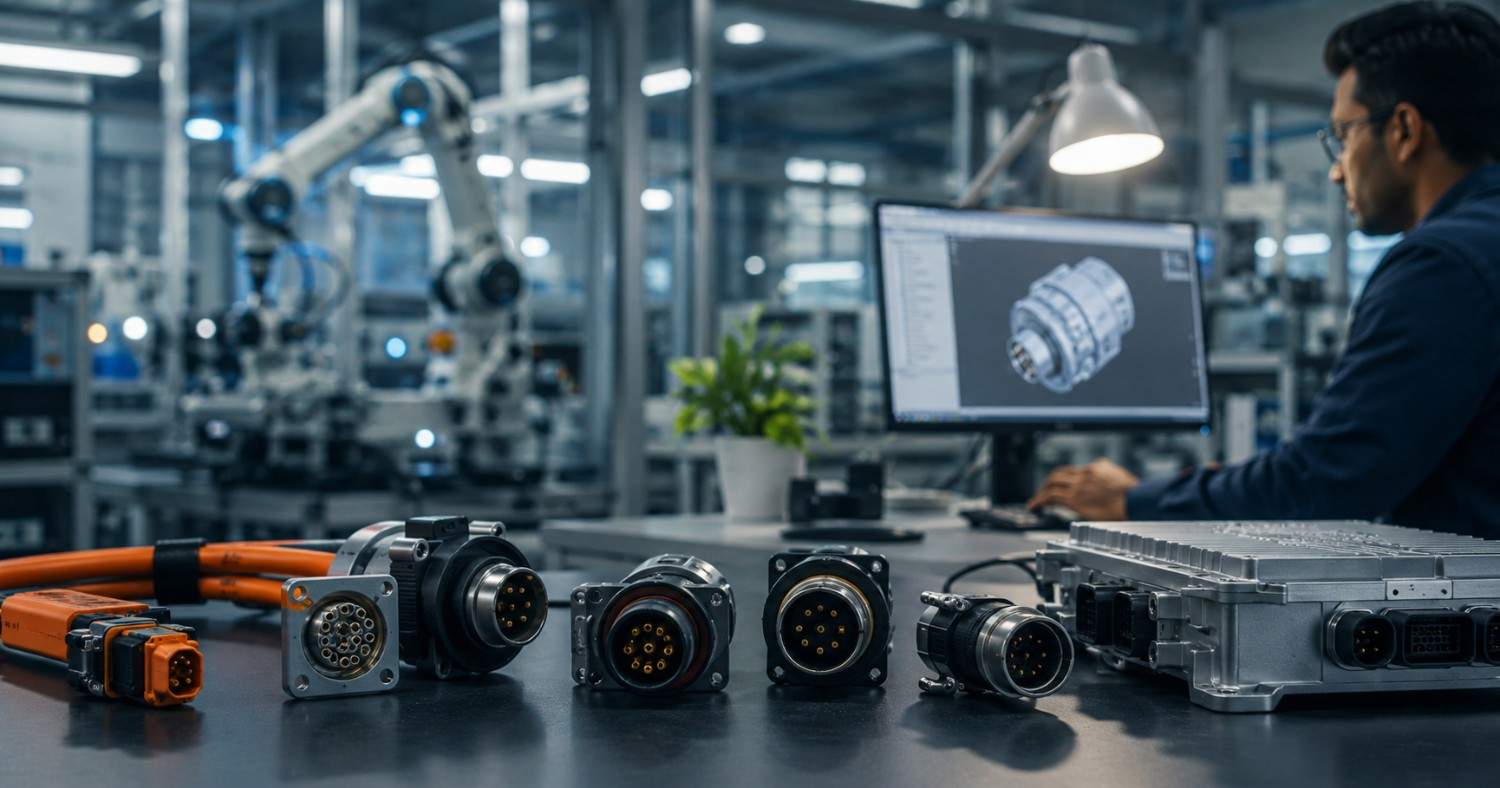
India’s electronics and advanced manufacturing ecosystem is witnessing a steady shift from assembly-led growth to deeper investments in core industrial technologies. The latest example comes from Bengaluru-based Tiea Connectors, which has raised Rs 77 crore in a Series A funding round led by IvyCap Ventures.
The round also saw participation from Jamwant Ventures, 8X Ventures, and a group of high-net-worth angel investors, according to company statements and multiple published reports.
The funding marks another signal that venture capital firms are increasingly willing to back India’s hardware and precision manufacturing startups — a segment that historically received far less investor attention than software and internet businesses.
Why This Funding Round Matters
Tiea Connectors operates in a niche but strategically important segment: high-performance electrical and electronic interconnect systems.
These components are used in sectors where reliability is critical, including:
- Electric vehicles (EVs)
- Aerospace
- Defence electronics
- Avionics
- Industrial automation
- Energy storage systems
While connectors may appear to be relatively small hardware components, they are essential to the functioning of advanced electronic systems. Failures in interconnect systems can lead to major operational disruptions in aircraft, EV battery systems, industrial machinery, and defence equipment.
India has long depended on imports for several categories of high-precision connectors and contact systems. As geopolitical tensions, supply chain diversification, and localisation mandates reshape manufacturing priorities globally, domestic players like Tiea are emerging in a strategically important position.
What Tiea Connectors Does
Founded in either 2019 or 2020 — different reports cite slightly different timelines — Tiea Connectors focuses on the design, development, and manufacturing of high-performance connectors, contacts, and precision-engineered interconnect solutions.
The company was incubated at the Indian Institute of Science (IISc), Bengaluru, and has developed capabilities across:
- Product architecture
- Rapid prototyping
- Tooling development
- Precision manufacturing
- Material engineering
- Miniaturisation technologies
- Application-specific connectivity systems
Tiea also functions as an original design manufacturing (ODM) partner for OEMs and industrial manufacturers. The company’s manufacturing facility in Dharwad, Karnataka, includes in-house tooling, molding, stamping, assembly, and testing capabilities.
According to the company and investor statements, the fresh capital will primarily be used for:
- Expanding manufacturing infrastructure
- Increasing automation
- Strengthening R&D and product engineering
- Scaling operations globally
- Expanding into high-growth industrial sectors
The Bigger Story: India’s Push for Electronics Self-Reliance
Tiea’s funding round arrives at a time when India is attempting to deepen domestic capabilities in electronics system design and manufacturing (ESDM).
Over the past few years, government policies including Production-Linked Incentive (PLI) schemes, localisation targets in defence procurement, and semiconductor initiatives have attempted to reduce India’s dependence on imported electronic components.
However, much of India’s electronics manufacturing growth has so far concentrated on assembly operations rather than core component manufacturing.
That is beginning to change.
The emergence of startups focused on connectors, sensors, power electronics, industrial materials, and embedded systems suggests the ecosystem is gradually moving up the manufacturing value chain.
This transition is strategically important for several reasons:
1. EV Manufacturing Requires Domestic Supply Chains
India’s electric mobility ambitions depend not only on battery production but also on reliable supporting components.
Advanced connectors are critical for:
- Battery management systems
- Charging infrastructure
- Power distribution
- Vehicle control systems
As EV adoption accelerates, domestic sourcing of such components becomes increasingly important for both cost optimisation and supply chain resilience.
2. Aerospace and Defence Need High-Reliability Components
India’s defence manufacturing ecosystem has expanded rapidly in recent years under the “Atmanirbhar Bharat” framework.
Defence-grade interconnect systems require:
- High temperature tolerance
- Shock resistance
- Miniaturisation
- Long operational life cycles
These are technologically demanding products with high qualification barriers, making them difficult segments for new entrants.
Tiea’s positioning in this space may give it access to long-term contracts and higher-margin industrial applications if it can consistently meet global standards.
3. China+1 Supply Chain Diversification
Global manufacturers continue exploring alternatives to China-centric sourcing networks.
India’s opportunity is not limited to final assembly. The larger economic opportunity lies in becoming a supplier of critical sub-components and precision systems.
Companies that can build globally competitive industrial products from India stand to benefit from this long-term shift.
Why Investors Are Paying Attention to Deep-Tech Manufacturing
Indian venture capital historically avoided hardware-heavy businesses due to:
- Long gestation cycles
- High capital expenditure
- Manufacturing complexity
- Lower short-term scalability compared to SaaS businesses
But investor sentiment has evolved in recent years.
Several factors are driving this shift:
Strategic Manufacturing Is Becoming Investable
Global disruptions during the pandemic exposed vulnerabilities in international supply chains. Investors increasingly view advanced manufacturing and industrial resilience as long-term strategic opportunities rather than low-growth sectors.
Government Incentives Reduce Market Risk
Policy support for domestic electronics manufacturing has improved visibility for component manufacturers.
Enterprise Demand Is Expanding
Indian OEMs in EVs, defence, drones, aerospace, and industrial automation are looking for local suppliers capable of meeting precision and reliability requirements.
This creates opportunities for specialised manufacturers that can deliver quality at scale.
Challenges Ahead for Tiea Connectors
Despite the funding momentum, scaling an advanced manufacturing company remains difficult.
Tiea will likely face several operational and strategic challenges as it grows.
Maintaining Quality at Scale
Precision connector manufacturing requires extremely tight tolerances and consistency. Scaling production without compromising reliability is often one of the hardest transitions for industrial startups.
Global Competition
Tiea operates in a market dominated by established international connector companies with decades of engineering expertise, deep customer relationships, and global certifications.
Competing against multinational suppliers will require sustained investment in:
- R&D
- Certification processes
- Supply chain efficiency
- Reliability testing
Long Enterprise Sales Cycles
Industrial and defence procurement cycles are typically long and highly qualification-driven. Revenue scaling in these sectors often takes longer than software-led businesses.
Capital Intensity
Unlike software startups, manufacturing businesses require continual investments in machinery, tooling, automation, testing infrastructure, and working capital.
That makes efficient capital allocation especially important.
India’s Hardware Startup Ecosystem Is Maturing
Tiea’s funding round also reflects a broader maturation within India’s startup ecosystem.
For years, Indian startup funding disproportionately flowed toward:
- Consumer internet
- Fintech
- Food delivery
- SaaS
Now, a new category of industrial and deep-tech startups is emerging across:
- Aerospace
- Robotics
- Defence tech
- Semiconductor tooling
- EV infrastructure
- Industrial electronics
- Precision manufacturing
This diversification could become increasingly important for India’s long-term economic competitiveness.
Countries that dominate advanced manufacturing typically control:
- Intellectual property
- High-value exports
- Industrial employment
- Strategic technologies
India’s ability to build globally competitive component manufacturers will likely influence how far its manufacturing ambitions can scale over the next decade.
What Comes Next
Tiea Connectors’ next phase will likely depend on execution more than fundraising.
The company now has an opportunity to strengthen its position in an industry where:
- Product reliability matters more than branding
- Customer trust takes years to build
- Scale advantages compound over time
If the company can successfully expand manufacturing capabilities while maintaining engineering quality, it could emerge as one of the more notable hardware manufacturing startups in India’s growing ESDM ecosystem.
At the same time, the funding round reflects a larger structural shift underway in Indian venture investing: capital is beginning to move beyond software into the deeper layers of industrial technology infrastructure.
That transition may ultimately prove more consequential for India’s manufacturing ambitions than many headline-grabbing consumer internet deals.
Also Read : Yes Madam Raises Rs 50 Crore From Info Edge Growth Fund in Maiden Institutional Round
Add Startup Chronicle as a preferred source on Google- Click Here
Last Updated on Friday, May 29, 2026 2:00 pm by Startup Chronicle Team
About The Author
